
Insight
Do you need clarity about immigration law?
We provide legal knowledge and professional perspectives in an accessible way, making complex rules understandable.
Legal perspectives from practice
Immigration law is a dynamic area of law where legislation, practice and the authorities’ assessments are constantly evolving.
Therefore, it is not always sufficient to know the wording of the law or the general information on the immigration authorities’ websites. Many questions require insight into practice, documentation requirements and the assessments that actually have an impact on the case processing.
At legalstay, we follow developments closely and share professional perspectives that make complex rules more accessible and useful.

EU family life: 5 weeks in Sweden is not enough
Date: April 14, 2025
Can a short stay in Sweden give access to EU residence rights in Denmark? The decision shows that even without a fixed time requirement, a 5-week stay may be insufficient if a real and stable family life is not documented.
Read more
Can a short stay in Sweden open the door to EU residence rights in Denmark?
The answer is no – at least not if the stay is only a short visit. The Immigration Board has stated in a decision from December 2024 that what is decisive is whether a real family life has actually been built or strengthened there.
The case concerned a 20-year-old Zambian citizen who applied for an EU residence card as a family member of his mother’s Danish spouse. The Danish citizen had lived in Sweden and, upon returning to Denmark, wished to take the applicant with him under the rules on secondary mobility.
What do the rules say?
When a Danish citizen has exercised his or her right to free movement in another EU country, family members may in certain cases be granted a derived right of residence in Denmark. ”Family members” also include children under the age of 21, either of the Danish spouse or of his or her spouse/cohabitant.
But this requires that a real family life has been built or consolidated in the other EU country — in this case Sweden.
Why was the applicant rejected?
Even though the applicant was 20 years old and could therefore basically be included as a child of the spouse, it was not enough.
The Immigration Board emphasized that the applicant had only stayed in Sweden for approximately 5 weeks before the family traveled on to Denmark. Before that, she had lived in Zambia, where she had her permanent residence, schooling and daily life.
The Board therefore assessed that the stay in Sweden was in the nature of a visit — not a real family life that had been built or consolidated in Sweden.
What to bring?
The decision shows that it is not enough to be included in the group of persons. The family must also be able to document that a real family life was actually established or strengthened in the other EU country before the Danish citizen returned to Denmark.
It therefore does not help in itself that the family subsequently lives together in Denmark.
legalstay recommends
If you are going to use the EU rules on secondary mobility, your stay in the other EU country should be planned thoroughly before you return to Denmark.
There is no fixed minimum requirement for the length of stay, but the shorter the stay, the stronger the documentation must be.
Therefore, make sure to document joint residence, daily life, support and the family’s actual life in the other EU country. Timing, duration of stay and documentation can be crucial.
Short-term work does not give the right to reside
Date: April 14, 2025
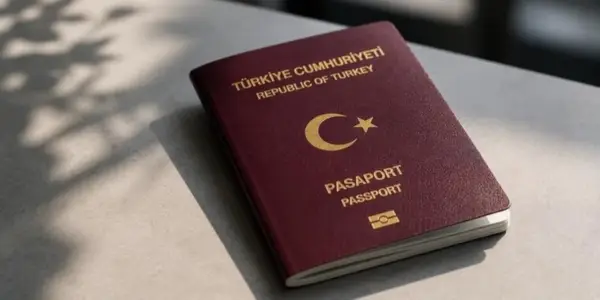
When does work count under the Association Agreement? The decision shows that the decisive factor is not only whether one has worked, but whether the work was carried out during legal residence and meets the requirements under the Association Agreement.
Read more
Does work always count if you have had income in Denmark?
Not according to the Association Agreement between the EU and Turkey. In a decision from 2023, the Immigration Board has stated that work can only be used to build rights if it is carried out during legal residence.
The case concerned a Turkish citizen who had previously had the right to reside in Denmark as an accompanying family member under EU rules. He had had wage income in Denmark and claimed, among other things, that he had also run a self-employed business.
What do the rules say?
According to Article 6 of Association Council Decision No. 1/80, a Turkish worker may in certain cases be granted the right to continue to reside and work in Denmark.
This basically requires one year of legal employment with the same employer.
Why was the applicant rejected?
The applicant had had a right of residence from December 2016, but SIRI assessed in August 2019 that the right of residence had expired.
During the period in which the applicant had legal residence, he had only had a wage income for approximately 6 months. He therefore did not meet the requirement of one year of legal employment with the same employer.
The later wage income from July 2020 to March 2021 could not lead to a different result, as the applicant did not have legal residence in Denmark at that time. The information about self-employment also did not change the assessment.
What to bring?
The decision shows that the decisive factor is not only whether one has worked in Denmark, but whether the work has been legal in the sense of residence law.
Work without legal residence cannot be used to build rights under the Association Agreement. The same applies if the employment does not meet the requirement of duration and affiliation with the same employer.
legalstay recommends
If you want to claim rights under the Association Agreement, it is important to have the documentation in order from the start. You must be able to show that you were legally resident while you were working, that you worked for the same employer for at least one year, and that you received a salary for the work.
Work only counts if it is carried out during legal residence.

Exemption when traveling abroad: When illness becomes important
Date: April 14, 2025
What happens to the residence permit if illness prolongs your stay abroad? The decision shows that illness can be important, but that the circumstances must be documented and assessed specifically.
Read more
What happens to your residence permit if you stay abroad longer than planned due to illness?
That question was central to a decision from January 2025, where the Immigration Board returned a case regarding the revocation of residence permits because SIRI had not sufficiently justified the assessment.
The case concerned a mother and her two minor children from Pakistan, who had a residence permit in Denmark as accompanying family members of a worker. They travelled to Pakistan in January 2024, and in June 2024 they applied for a dispensation from lapse because the mother, following an involuntary abortion, infections and poor health, wanted to stay in Pakistan with the children for a longer period.
What do the rules say?
A residence permit may lapse if you stay outside Denmark for a longer period of time.
In certain cases, however, you can apply for a dispensation so that your residence permit is retained even if you have left the country. This requires, among other things, that the application is submitted before the residence permit expires and that there is a specific reason for your stay abroad.
Why was the case remanded?
The mother and children had applied for a dispensation within 6 months of leaving. Yet SIRI emphasized, among other things, that the application had not been submitted until almost 6 months after leaving, and that the dispensation was applied for until October 2025.
The Immigration Board assessed that SIRI’s decision was defective, as SIRI had not sufficiently taken into account the relevant considerations, including that the application had been submitted before the residence permits automatically lapsed.
The Immigration Appeals Board also emphasized that SIRI should have given the family a deadline to return to Denmark because they had applied for an exemption before the residence permits expired. An applicant may not lose their residence permit solely because the authorities only make a decision after the expiration date.
What to bring?
The decision shows that the authorities must make a specific assessment when applying for an exemption from lapse.
It is not enough to look at how long the applicant has been out of Denmark. The authorities must also take into account the purpose of the departure, the time of the application and the specific circumstances that justify the need to stay abroad.
Illness and health conditions may therefore be relevant, but they must be documented and assessed specifically.
Legalstay recommends
If you are going to be out of Denmark for a longer period of time, you should always investigate whether your stay abroad may affect your residence permit.
If you apply for an exemption from lapse, the application must explain three things clearly: why you have left, why you cannot return yet, and when you expect to travel back to Denmark.
In the event of illness, the documentation should not only confirm that you are ill. It should also explain why the illness makes it necessary to stay abroad, what treatment you are receiving, and when you are expected to be able to travel back to Denmark.

Permanent residence: Food delivery should count as work
Date: February 10, 2025
Can work as a food delivery boy count towards applying for permanent residence? The decision shows that it is not the job title, but the actual nature, scope and documentation of the work that are decisive.
Read more
The Immigration Appeals Board addressed this issue in a decision from 2025. The case shows that platform and delivery work cannot be automatically excluded. What is crucial is how the work is actually performed — and whether it can be documented.
The case concerned a Syrian citizen who had applied for a permanent residence permit. The Immigration Service refused because, in the Board’s assessment, the applicant did not meet the employment requirement. However, during the appeal proceedings, documentation was presented of the applicant’s work as a food delivery boy.
What do the rules say?
One of the requirements for a permanent residence permit is that you must meet the employment requirement.
This means, among other things, that you must have been in ordinary full-time employment or have been self-employed for at least 3 years and 6 months within the past 4 years.
Why was the case remanded?
The decisive factor was whether the work as a food delivery boy could, by its nature, count as employment.
The Immigration Board placed emphasis on the applicant’s submission of documentation of the work, including pay slips and information on working hours. It was also stated that the applicant worked permanently at the food delivery company and had a significant number of hours.
On this basis, the board assessed that work as a food delivery boy should be considered as salaried work and therefore included in the calculation of the employment requirement.
The Danish Immigration Service had not taken a position on this work during the relevant period. The case was therefore sent back so that the Agency could assess the case again on the correct basis.
What does the decision show?
The decision shows that it is not the job title that is decisive, but the real nature of the work.
Work as a delivery boy, driver or platform worker cannot be automatically rejected as relevant employment. The authorities must look specifically at how the work is actually performed and whether it can be documented as paid employment or self-employment.
If the work is real, documented and has the necessary scope, it may be important for the assessment of permanent residence.
legalstay recommends
If you are seeking permanent residence, you should ensure that all relevant work is included in the assessment — including work as a delivery person, warehouse worker, platform worker or similar.
What is crucial is not the title of the position, but the actual nature and scope of the work. If a specific period of work is not included in your case, it may be that the authorities have not taken a correct position on the actual nature and scope of the work.

Proforma Marriage: When Marriage Isn't Enough
Date: October 26, 2023
Is a valid marriage enough to obtain family reunification? The decision shows that the authorities also assess whether the relationship appears real, credible and supported by prior personal knowledge between the parties.
Read more
This question was central to a decision by the Immigration Board, where an applicant was refused spousal reunification. The Board assessed that there was a solid basis for assuming that the marriage had been entered into with the decisive purpose of obtaining a residence permit in Denmark.
The case concerned a married couple who had submitted documentation of their relationship, including online correspondence. They spoke the same language, there was not a large age difference between them, and they had lived together after marriage.
Still, it wasn’t enough.
What do the rules say?
In the case of spousal reunification, it is not sufficient that the marriage is formally valid.
The authorities may refuse if there is a solid basis to assume that the marriage was entered into with the decisive purpose of obtaining a residence permit.
It is often called a marriage of convenience.
Why was the applicant rejected?
The Immigration Board emphasized that the couple had not proven a usual and personal knowledge of each other.
It was of particular importance that the reference during the oral board meeting could not answer more specifically questions about the couple’s online contact, what they had done during the visit in connection with the marriage, and which family members they had visited.
Although there were factors that spoke in the couple’s favor — including a common language, limited age difference, and submitted correspondence — the board overall assessed that the marriage had been entered into with the decisive purpose of obtaining a residence permit.
What does the decision show?
The decision shows that documentation of contact is not always enough.
The authorities also look at the quality of the relationship: whether the couple knows each other personally, can explain their relationship concretely, and whether the information is related to a real marriage.
The decisive factor is therefore not only whether one can document that there has been contact. The decisive factor is whether the contact and cohabitation show a real relationship.
legalstay recommends
In the case of spousal reunification, it is not enough to document that the marriage has been formally entered into. The application should also show that the relationship is real.
This means that the couple should be able to explain the course of the relationship: how they met each other, how the contact developed, when they have been together, and why they chose to get married.
Documentation such as messages, pictures, and travel documents can be important, but it should support a comprehensive and credible narrative about the relationship.
If the couple is called for an interview or board meeting, it is often the specific details about everyday life, contact and each other that are important for the assessment.

Cousin marriage: When the family relationship sharpens the assessment
Date: November 13, 2019
Can you get spousal reunification if you are married to your cousin? The decision shows that close kinship does not preclude family reunification, but that the couple must be able to document that the marriage is based on a real, personal and voluntary relationship.
Read more
This is possible in some cases — but a decision from November 2019 shows that the authorities look particularly carefully at whether the marriage was entered into voluntarily when the couple is closely related. In this case, the applicant was rejected because the Immigration Board assessed that there was insufficient basis to dispel doubts about whether the marriage was entered into at the will of both parties.
What do the rules say?
One of the requirements for spouse reunification is that the marriage must have been entered into at the request of both parties.
If the couple is closely related, e.g. first cousin, this may, according to the Immigration Act, give rise to a presumption that the marriage was not entered into voluntarily.
This does not mean that cousin marriages are automatically rejected. However, the couple must be able to show that the marriage is based on a genuine and independent decision.
Why was the applicant rejected?
The couple were first cousins. They had only had telephone contact before deciding to get married, and the marriage was concluded just days after their first personal meeting.
The Immigration Board therefore emphasized that the couple had not documented a long-term and in-depth knowledge of each other beyond the family relationship.
On this basis, the board found that there was still doubt as to whether the marriage had been entered into at the request of both parties.
What does the decision show?
The decision shows that the family relationship in itself does not preclude spousal reunification.
But if the couple is closely related, it becomes particularly important to be able to document the independent nature of the relationship. The authorities look at, among other things, how long the couple has known each other as a couple, how the relationship developed, who took the initiative for the marriage, and whether the couple themselves had real influence on the decision.
It is not enough to explain that you know each other through family. What is crucial is whether a personal and voluntary relationship between the parties can also be documented.
legalstay recommends
If you are married to a close relative, the application should be prepared particularly thoroughly. In legalstay’s experience, cases involving family relationships are often assessed more strictly because the authorities look more closely at whether the marriage was entered into voluntarily and is based on a genuine relationship.
The closer the family relationship, for example cousins, the more important it is to document that the marriage is based on a real, personal and voluntary relationship.
INSIGHT INTO LEGAL STAY
Knowledge and insight
At legalstay, we actively work with knowledge sharing as part of our professional work. On our platform, we continuously share insights into practice and relevant legal matters within immigration law.
You can also follow legalstay on Instagram, where we share professional perspectives and provide insight into the work behind the cases.
Understandable knowledge
We translate complex legal topics into understandable and applicable knowledge.
Current updates
We keep you updated on relevant changes in legislation and practice.
Perspective and insight
We give you perspectives and insights that create value for you and your situation.
CONTACT US
Tell us about your situation – we'll get back to you quickly.
You are welcome to contact us for a non-binding conversation. We treat all inquiries confidentially and with respect.
Call us on +45 42 66 69 34